Showing posts with label led lighting. Show all posts

Thursday, September 20, 2012

New York's Valhalla Station Reduces Lighting Energy Consumption By 75.9%


Westchester County's (DPW) Saves Thousands with Seesmart LED Lighting

New York's Valhalla Station Reduces Lighting Energy Consumption By 75.9%
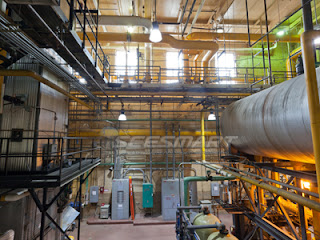
New York's DPW Valhalla Station
The County of Westchester, New York - took advantage of new energy saving LED lighting technology by commissioning Tri-State LED Inc to replace their existing lighting fixtures at Valhalla Station with state-of-the-art Seesmar(SEST) LED tube lights and high bays.
The new energy efficient Seesmart LED tube lights will only consume 15 watts of electricity compared to the 35 watts of the orginal compact fluorescent tubes (CFL's) while providing a better quality of light.
The new LED high bays will only consume 100 watts of power as compared to the 250 watt high pressure sodium lamps they are replacing. The new LED lighting uses considerably less wattage and provided us with brighter working surfaces. "We are much happier to be working in a well lit environment", said the tradesmen, at the Valhalla facility

Comprehensive Lighting Energy Audit

As part of our standard pre-sales process Tri-State LED performed a comprehensive lighting audit and analysis of the station's lighting infrastructure including the existing lighting's power consumption, maintenance cost and many other detailed factors. TriState then uses proprietary energy auditing software to calculate the proposed cost and demand of the new LED lighting as compared to the existing lighting in the facility.
A detailed report of all aspects of the lighting project is then provided to the client in a clear decisive format. This detailed report allows the client to accurately see the financial and environmental benefits before proceeding. Clients can then make an informed decision if LED lighting is the right solution for them. Furthermore, TriState LED provides this service to their clients at NO COST or OBLIGATION.
After reviewing the report Westchester County, established that LED lighting had the most viable return on investment (ROI) and was the best technology that met DPW's goals. The lighting replacement at Valhalla Power Station at 35 Woods Road White Plains New York reduced their existing lighting energy consumption by 75.9% resulting in a savings of $17,634.49 annually. The County of Westchester expects to recieve a complete ROI in 16 months making it a sound business decision.
As a local company TriState LED is proud to have been an integral part of the entire process for the project, from specification to savings calculation. With its vast experience in LED lighting and comprehensive product catalog, TriState was not only able to improve the lighting conditions to an energy-efficient source but also helped to complete an environmentally friendly project. "It is our hope that other local government agencies will follow suit and take advantage of the energy reductions available by utilizing our quality Seesmart LED product line", said Bob Ostrander, a principal at Tri-State LED.
For more information about any of TriState LED's products and services, call 203-813-3791, view the company on the web at www.tristateled.com or visit our lighting showroom at 255 Mill Street in Greenwich Connecticut. (Get Directions)

Friday, September 14, 2012

Oak Park Fort Knox Neighborhood
It is a fairly well known fact that LED lighting can provide a significant energy reduction as well as financial savings for many commercial businesses across the nation but, recently a Fort Knox neighborhood has announced they will achieve a 90 percent energy reduction by replacing their existing residential lighting with NEW energy efficient LED light bulbs.
The massive residential LED retrofit will replace more than 9,500 lamps with state of the art LED bulbs. Officials kicked off the massive lighting project with a lighting ceremony on September 5th. A recent press release states that the project will be completed in October 2012 and the Knox Hills neighborhood will be the largest residential LED retrofit-installed community in the world.
In recent tests performed by Consumer Reports, they have announced that LED light bulbs have several advantages as compared to traditional incandescent and Compact Fluorescent Lights (CFL).
In recent years, the U.S. Army has been on a major effort to save energy at the Kentucky base that has been undergoing a major transformation. Read the Lane Report...
In all, more than 9,500 LED bulbs will be put in, and will represent a 90-percent reduction in energy consumption versus conventional bulbs, with each bulb lasting approximately 22 years, according to a spokesman.
The LED bulbs are also said to be somewhat more efficient that compact fluorescent bulbs and the contain no mercury.
The Fort Knox project, which will reduce annual energy costs by $34,000, and more than $859,000 over the life of the LED bulbs, will conserve approximately 2.6 million kWh worth of light energy, the equivalent of planting 547 acres of trees.
The LED lighting project will play an important role in the energy efficiency and sustainability program being implemented in the Fort Knox area.
By Scott Glidden

Thursday, July 26, 2012

Seesmart LED Lighting Strives To Increase US Manufacturing


Seesmart LED Lighting Chicago IL
Credit: Seesmart Technologies
Seesmart Technologies (SEST), a leading manufacturer of innovative high quality, energy efficient LED lighting solutions strives to increase it's production of LED lighting products in the United States.
Frustrated by the additional expense and difficulties with slower shipping, Seesmart feels it is very important to have more control over the manufacturing process. Combined with their desire to create jobs for US citizens, the 15 year old company started building factories in Simi Valley, California, and Crystal Lake, Illinois.
"When we do the numbers we're actually ahead manufacturing here instead of paying for air freight and dealing with the logistical issues that we're having in China," said Raymond Sjolseth, the company's president and co-founder.

According to an interview with CBS news, Seesmart has pursued grants and incentives from federal agencies that might assist companies like theirs, who manufacture energy-efficient technologies and believe that employing our own workers is a key component in improving our current economy. Even know they have not been able to cut through the red tape, they are still committed to bringing jobs home.
The company today makes 20 percent of its products in the United States, a number it aims to push to 75 percent by the end of next year. Successful completion of this goal could result in hundreds of new jobs for US employees.
With the continued success of large orders in numerous sectors of commercial business such as Pasadena College, SL Green Realty Corp., Memorial Sloan Kettering Cancer Center,Zyloware Eyewear and Cambridge Security Seals increasing production in the US would certainly provide an obvious advantage for local clients.
Most manufacturers have learned to operate factories with fewer workers. Many of these jobs consist of keeping high-cost, high-speed machines running smoothly, rather than assembling goods by hand. Many have found that wages are a less critical issue in choosing a adequate factory site.
At Seesmart, shifting production from China to the United States is cutting logistics costs by about 30 percent as it no longer needs to fly merchandise across the Pacific. Products can also be made and shipped to customers more quickly, Sjolseth said.
"The LED business involves a very compulsive buy, and many clients will not tolerate long lead times," he said. "So if you're not delivering in four to six weeks, it's not going to happen. You're going to lose the deal and they're going somewhere else."
SL Green LED lighting retrofit at 420 Lexington Ave
Credit: SL Green Realty Corp.
Higher wages have not been a roadblock for the company because its automated factories mean that labor costs represent less than 2 percent of the cost to manufacture lighting.
With $11 million in revenue last year, Seesmart Technologies is a relatively small company, but it is one of many manufacturers of all sizes to increase production in the US.
Honda (HMC), General Electric (GE), Catepillar (CAT), NCR, Avago (AVGO) and Texas Instruments (TI) are among some, that are expanding production in the United States.
Honda's decision to further expand its Civic plant in Greenburg, Indiana., adding 500 workers and expanding capacity by 50,000 vehicles a year. The company laid out a big plans for North America this week. It has spent $1.6 billion at its North American factories in the past 18 months as it prepares to mark its 30th anniversary of making cars in the U.S. That officially happens on Nov. 1, the day in 1982 when the first Accord rolled of the line in Marysville, Ohio. (Read Story)
According to a recent article in USA Today - Faced with rising costs, General Electric is moving production of its new energy-efficient water heater halfway around the world from China to the US, bringing 400 jobs and a newly renovated factory.
CAT, which has announced nine new plants or expansion projects in the past year alone, said it has chosen to grow in the United States both to meet local demand and because it has been able to find a steady supply of workers able to run the advanced equipment that powers its plants.
NCR was similarly motivated by a more nuanced view of costs when it decided to move manufacturing of ATMs sold in the U.S. from China, India and Hungary to a new 260-employee plant in Columbus, Ga., last October.
AVGO is said to be planning to buy as much as $130 million in manufacturing equipment to expand in Fort Collins, Colorado. Previously, IHS iSuppli has reported that Avago makes a part for the iPhone 4S used to connect to multiple wireless networks. Meanwhile, TI is ramping up production at the chip factories in its home state. (Read Story)
One source claims that TI's power chip business gets large orders from Apple, which has contributed to "thousands of jobs" being created in the US. A number of these are said to be high-salaried jobs demanding engineering degrees, especially at a fab in Richardson, Texas.
After decades roaming the world in search of lower costs, U.S. manufacturers are finding that factories at home can compete with China, India, Mexico and other low-cost countries. Other costs such as higher transportation costs and wage inflation in China could drive more production back to the United States.

Wednesday, July 18, 2012

SL Green furthers commitment to energy efficiency with Seesmart LED lighting


SL Green Realty Corp. retrofits buildings with
energy efficient Seesmart LED lighting
LED lighting manufacturer Seesmart Technologies Inc. (SEST) announced today that it has been selected by SL Green Realty Corp. (SLG), New York City’s largest commercial property owner, to install it’s industry leading LED lighting products throughout 21 commercial office properties, as part of one of the nation’s largest LED lighting efficiency projects.
SL Green is furthering their commitment to energy reduction and sustainability by replacing over 16,000 fluorescent, incandescent and halogen light bulbs with energy efficient Seesmart LED lighting solutions in 21 of their NYC properties.
In March, SL Green installed 7,500 LED units within 16 suburban division (Reckson) buildings, totaling more than 2.5 million s/f in its Westchester & Fairfield County portfolios including 360 Hamilton Ave. and 140 Grand St. in White Plains; 200 & 500 Summit Lake Dr. in Valhalla; and 680/750 Washington Blvd. and Landmark Sq., in Stamford, Ct.
Financial savings are estimated to be in excess of $630,000 annually while providing a superior quality of light and a significant improvement in the longevity and performance compared to their existing lighting. The project will also generate an additional $125,000 in labor and material savings. The combined annual savings will be in excess $745,000.

In a recent interview with Kenneth Ames, CEO of Seesmart Technologies Inc., he said, “Seesmart is pleased to support SL Green Realty Corp., to utilize our cutting edge LED lighting products to maximize energy efficiency and savings throughout its portfolio. The selection of Seesmart is a testament to the market leading efficiency, quality and service we provide to our customers”
Lighting represents approximately 25 to 30 percent of total energy cost in the commercial real estate industry. By implementing Seesmart LED lighting solutions, SLGreen will reduce energy costs by more than 50 percent and extend lamp life by as much as 10 times the average life of traditional lighting products equating to about 8 years.
Jay Black, sustainability Director at SL Green said, "LED equipment allows us to significantly impact life-cycle costs, affecting energy use and lamp life, 90% of lighting's life-cycle costs, will yield a project payback of only three years, providing $4.5 million in total life-cycle savings."
According to John Barnes, senior VP and senior director of Reckson, a division of SL Green, "Through our market-leading program, the LED retrofit is the latest example of how we are utilizing sustainability to improve our business. It saves both SL Green and our tenants money, reduces energy waste and contributes to our best in class experience."
With the latest massive LED lighting retrofit utilizing Seesmart LED lighting solutions I wanted to understand how a leader in sustainability with numerous citations for energy reduction determines the best energy efficient products and services from all the competitors emerging in the marketplace today.
In an effort to assist other commercial businesses faced with the task of reducing costly energy consumption I interviewed the leaders involved in this project including Jay Black, Sustainability Director at SL Green, Greg Hudson from Environmental Systems Corporation (ESC), a designer and contractor that provide due diligence consulting for energy-efficient installations, as well as Patricia Lee from CodeGreen, a leading efficiency company helping real estate and business owners develop and achieve their energy reduction and sustainability goals.
Greg Hudson from ESC said, “We put Seesmart's LED products through performance comparisons with other industry competitors to insure SL Green was using the best product for the job. Through all of our testing, Seesmart products outperformed the other manufacturers in light output, lower wattage use, as well as the return on investment (ROI). Seesmart has stayed ahead of the market in terms of technology adaptation and the continuing effort to offer competitive LED products."
As part of SL Green’s commitment to running a high performance and LEED certified building, CodeGreen was contracted to manage the LEED certification process and perform an ASHRAE Level II Energy Audit at 360 Hamilton Avenue. The energy analysis performed identified energy conservation measures totaling over 420,000 kwh of savings annually including lighting upgrades that could result in over 345,077 kwh saved annually. From the over 20 million sq. ft. of energy audits and retro-commissioning that CodeGreen has performed, efficient lighting has been a leading factor in optimizing energy use in a building. Seesmart worked with the building team to successfully upgrade lighting fixtures resulting in an increased Energy Star score and contributions to the LEED certification. Energy efficiency is an integral part of the LEED program and was essential in the successful achievement of LEED-EB Gold certification at 360 Hamilton.
Q&A with Jay Black:
Examiner: Why did you decide to install LED lighting into you buildings?
Jay Black: Due to the extreme energy efficiency and recent advances of LED lighting we felt it would serve as an excellent catalyst toward our sustainability goals. When implemented correctly, quality LED lighting provides a quick payback and ease of integration into our existing infrastructure. Our sustainability team consulted with leaders in energy efficiency and sustainability in our local area (CodeGreen, ECS) in an effort to thoroughly analyze all aspects of our current project and ascertain the complete benefits to our particular organization. After carefully reviewing all the attributing factors our team concluded that the industry leading LED lighting solutions from Seesmart were the right choice for us.
Examiner: Some say that LED technology is not here yet! How would you respond to that comment?
Jay Black: First I would like to start by saying all LED's are not created equal. There are many contributing factors you must address before choosing any LED lamp including light rendering, warranty period, company stability and many other measures. Our team performed a significant amount of research into current LED technology and have ascertained if you select a quality LED light such as Seesmart lighting we feel the technology is definitely here.
Examiner: How does LED lighting compare to other energy efficiency products such as solar and wind technologies?
Jay Black: LED lighting is definitely a leader in energy saving technology. When you carefully review other products such as solar and wind you will quickly see in regards to energy reduction and ease of integration, LED will provide a significantly better savings in a much quicker time frame while being much easier to implement into your existing infrastructure.
Examiner: There is speculation that the cost of LED lighting will go down in the next few years. Why did SL Green decide to move forward today?
Jay Black: We wanted to take advantage of available savings now. The ROI for our current project is about three years, which is an excellent payback! We are in the businesses of buying and selling buildings. Implementing upgrades, generates value creation for us which we can project outward. The lighting retrofit increases value to our buildings as well as providing cost savings. Additionally, one must look at lost opportunity cost. Even if the lamp cost does go down in three years, our lamps will already be paid off while our savings will continue for many more years. For us it did not make sense to wait and lose $745,000 in annual savings.
Examiner: In your savings analysis, what factors were considered in your report?
Jay Black: We reviewed all factors such as kWh savings, product cost and ROI as well as internal accounting aspects. All company's measures will be different so you must consider how LED lighting relates to your particular business and the programs you have currently have implemented.
Examiner: Why did SL Green select Seemart LED lighting opposed to other leading competitors in the industry?
Jay Black: There are many factors that must be considered when choosing a company and product for a project of this magnitude. The decision is more complex than just the initial cost of the light bulb. SL Green selected Seesmart Technologies to deliver significant cost savings. As a leading provider of LED lighting solutions, Seesmart delivers superior equipment, efficiency, longevity, exceptional warranty and outstanding service. A five year warranty will have little value if the company is not around to honor it. We reviewed several leading manufacturers, and found Seesmart Technologies' "incomparable qualities" provided us with the confidence to introduce this innovative technology throughout our portfolio.
Examiner: How has your experience been working with the Seesmart team?
Jay Black: I was very impressed with Ron Young and the entire team. From the beginning they were very accessible and worked diligently to accommodate the particular needs of our organization. They provided an excellent comfort level and professional expertise in all aspects of the project while respecting the input of our team. In addition, they tested numerous bulbs in a variety of locations to provide the best light output and design implementation for each individual application resulting in a look and feel we were very impressed with.

In Conclusion:

After speaking to Jay Black and his sustainability team, it is clear to me why SL Green Realty Corp. is a leader in the industry. Their professional staff has expertise in a variety of areas and works diligently with other leading efficiency experts to analyze all associated factors, targeting the specific areas throughout it's enormous portfolio which achieve the greatest benefit for their particular organization. By utilizing this comprehensive and strategic approach SL Green was able to maximize their overall financial savings while reducing lighting energy consumption by more than 50 percent.
Through it's huge array of industry leading LED lighting products, Seesmart was able to meet the diverse needs of SL Green by providing innovative solutions to the individual challenges SL Green presented throughout the entire project.
SL Green selected Seesmart based on all of the attributing factors, including superior products, efficiency, longevity, exceptional warranty and outstanding service and not just initial lamp cost. "The cooperative effort among all parties involved in this project significantly improved the overall outcome and I believe have made us a better company.," said Ron Young of Seesmart. Through professionalism and due diligence these leading companies strive for excellence in all that they do, resulting in a very smooth running project with little disruption in day to day business. Other commercial businesses could learn alot from their success in improving business and reducing cost through energy efficiency and sustainability.
Tuesday, July 3, 2012

LED Street Lighting Delivers Up To 85% Energy Savings In Global Trial

©Copyright Forbes.com - Author Justin Gerdes
Results from a global trial of light-emitting diode (LED) street lights confirm that the fixtures can deliver electricity savings of up to 85% over incumbent technologies. The two-and-a-half-year pilot, called LightSavers, tested 533 LED lamps in 15 trials in 12 cities, including New York, London, Hong Kong, Toronto, and Sydney.
Findings from the trials are presented in a report co-released by The Climate Group, electronics giant Philips, and HSBC earlier this month on the sidelines of the Rio+20 summit. The Climate Group launched LightSavers in 2009, supported by the HSBC Climate Partnership, with the goal to accelerate the market adoption of outdoor LED lighting and smart-lighting controls.
Key findings from the report, Lighting the Clean Revolution: The Rise of LED Street Lighting and What it Means for Cities, include:
. LEDs achieve the expected 50 to 70% energy savings, and reach up to 80% savings when coupled with smart controls. [Energy savings in the trials vary from 18% to 85%, with 20 out of 27 products achieving savings of 50% or more, and ten showing savings of 70% or more.]
. Surveys in Kolkata, London, Sydney, and Toronto indicated that between 68% to 90% of respondents endorsed LEDs city-wide rollout. Benefits highlighted included improved safety and visibility.
. LED lighting trialed lifespan ranges from 50,000 to 100,000 hours indicating a high return on investment.
. The ‘catastrophic’ failure rate of LED products over 6,000 hours is around 1%, compared, for example, up to 10% for ceramic metal halide fixtures over a similar time period.
. The Climate Group and Philips are calling for an international low carbon lighting standard to be created and implemented ensuring that citizens worldwide have access to energy efficient outdoor lighting.
LED Street Lights Save Energy We conclude that LEDs are ready to be brought to scale in outdoor applications. The independent and verifi­able results from the LightSavers trials and accompanying public surveys give compelling evidence that many commercially-available, outdoor LED products offer high quality light, durability, and significant electricity savings in the range of 50 to 70%, wrote Climate Group CEO Mark Kenber in the report’s foreword.
“High capital cost and a dearth of effective financing approaches continue to be barriers to market maturity. But these will diminish as investment flows into companies making quality products; as LED and smart control device prices continue to fall; and as innovations spread in project financing and procurement in cities like Birmingham, Guangzhou and Los Angeles.”
In California, to cite another example, support for LED street lights project financing has come from the California Energy Commission (CEC) and the U.S. Department of Energy. In January, I reported at this blog that 10 California cities, several of them quite small, had used funding provided by the American Recovery and Reinvestment Act (ARRA) to undertake LED street lighting retrofit projects. Since I published that post, the CEC has announced that about a dozen more California cities have launched LED street lighting retrofit projects courtesy of the same ARRA-funded Energy Efficiency Conservation Block Grant (EECBG) program.
So confident are the report partners in the potential of LED lighting they want LEDs to become the global lighting standard. “All new public lighting – both street lighting and in public buildings – should be LED by 2015, with the aim of all public lighting being LED by 2020,” said the Climate Group’s Kenber in a statement.
The authors conclude: “LED outdoor luminaires have reached maturity in terms of their performance. City lighting managers from across the world have independently verified that LEDs can live up to their promise of exceptional perfor­mance, energy efficiency, and public approval, with indicators pointing towards stabilization in light output in many products after an initial period of volatility.”

Tuesday, May 22, 2012

Cambridge Security Seals goes Green with TriState LED

Energy Efficient LED Lighting Solution By Tri-State LED Lighting

Cambridge Security Seals (CSS), the quality leader in tamper resistant and loss prevention seals, recently completed an extensive series of eco-renovations, including a complete facility retrofit at its Pomona manufacturing facility featuring the installation of energy-efficient interior LED lighting by Seesmart LED, Inc. The addition of Seesmart LED fixtures is part of a larger energy efficiency strategy that includes a complete HVAC system upgrade, environmentally-conscious plumbing and fixtures, and other power-reducing tactics that support CSS’s goal of becoming a low-energy establishment.
Cambridge Security Seals Goes Green with TriState LED Lighting Pomona, NY, February 29, 2012 — After the recently completed lighting retrofit, CSS is lit with LED luminaires in the offices, hallways and manufacturing facility, delivering energy savings estimated at nearly 70 percent over the old non-LED fixtures.
According to Adam Meyers, vice president, finance for CSS, the indoor LED lighting allows the facility to consume a third less lighting energy than comparable facilities. Meyers estimates that the new luminaires should provide payback in 28 months.
Cambrige Facilty Before LED Lighting Solutions The Seesmart LED luminaries are expected to provide more than a decade of virtually maintenance-free operation.
“The payoff is more than what is saved in energy consumption and cost,” said Meyers. “It sets a tone of efficiency and strategic thinking about resources that is reflected in everything from our product design to our manufacturing, distribution and working with customers. These changes in our physical plant are completely consistent with our culture of achieving superior results at a lower cost.”
LED tube lights replaced the original compact fluorescent fixtures. Based on Seesmart LED technology, luminaires provide superior light quality with little to no spill-off into neighboring areas. In addition, traditional incandescent fixtures were replaced by Seesmart LED household bulbs and high power LED lights.
“Energy efficient and near maintenance-free LED lighting is ideal for the manufacturing and distribution centers that burn lighting for extended periods of time year round,” said Raymond Sjolseth, president of Seesmart. “Seesmart’s LED products offer CSS early payback and financial savings over the full lifetime of the product – they are the best choice for any commercial business today.”
Seesmart's product families include LED fixtures and bulbs, high-brightness LEDs, street lights, tube lights and wall washers. Seesmart LED products are driving improvements in applications such as general illumination, parking garages, office lighting and more...
For additional product and company information and to learn more about the LED Lighting Revolution, please visit www.tristateled.com.
Cambridge Security Seals After LED Lighting Retrofit
Cambridge Security Seals
One Cambridge Plaza
Pomona, NY 10970
For US call 845-520-4111
For Canada call 845-520-4111 x112
Fax: 845-290-0676
www.cambridgesecurityseals.com

Friday, April 27, 2012

LED Lighting for all Applications at Wholesale Prices


LEDs used as a replacement for incandescent light bulbs and fluorescent lamps are known as solid-state lighting (SSL) - packaged as a cluster of white LEDs grouped together to form a light source. LEDs are extremely efficient and have a long lifespan. The long lifetime of LEDs make SSL very attractive. They are also more mechanically robust than incandescent light bulbs and fluorescent tubes. Currently, solid state lighting is becoming more available for household and commercial use, however not all LED light bulbs and tube lighting are created equal. Light quality, warranty length, application type and a number of other attributes effect the selection of the correct LED lamp.
One 6 watt LED light bulb can potentially last up to 58,600 or more hours than a 60 watt incandescent bulb, and potentially 50,000 more hours than a CFL. Although there is a cost difference between an incandescent light bulb and a LED light bulb, however, the kWh usage is significantly lower with an LED light. Over this period of time, a significant amount of money can be saved. LEDs will also contribute in a positive way by producing less waste and in turn provide an environmentally friendly solution.
Incandescent bulbs are less expensive but also much less efficient, generating from about 16 lm/W for a domestic tungsten bulb to 22 lm/W for a halogen bulb. Fluorescent tubes are slightly more efficient, providing 50 to 100 lm/W for domestic tubes (average 60 lm/W), but are bulky and fragile and require starter or ballast circuits. Compact fluorescent lamps, which include a quiet integrated ballast, are more efficient and fit in standard light bulb sockets, however one must overlook the poisonous mercury they contain.
Seesmart LEDs are now well established in lighting applications such as linear lighting fixtures, street lights, recessed lighting and exterior flood lights and wall packs. High output LED fixtures suitable for general architectural lighting applications are also available in our product line. LEDs expect that technological advances will reduce costs such that SSL will replace incandescent and fluorescent lighting in most commercial and residential applications.
LED lights have great power advantages over white lights when a specific color is required. Unlike traditional white lights, the LED does not need a coating or diffuser that can absorb much of the emitted light. LED lights are inherently colored, and are available in a wide range of colors.

LED Lighting Typical Uses

Seesmart LED lighting currently encompasses a very robust product line boasting over 500 sku's providing a led light bulb, led lamp or LED tube light for every application. TriState LED encourages you to compare our vast LED lighting productsand retrofit solutions to our competitors inventory before making a selection for your particular lighting project. We offer LED lighting solutions for all lighting applications including Accent Lighting, Residential Lighting, Commercial Lighting, Retail Lighting, Restaurant Lighting, Office Lighting, Hotel Lighting and Exterior Outdoor Lighting. Browse our many categories to find the energy efficient LED lamp or light bulb for you specific lighting application.

Friday, March 16, 2012

New York City - SL Green Goes Green With Tri-State LED Lighting

SL Green Sustainability Director Jason Black on Building a Better Light Bulb


In January, SL Green purchased just over 5,000 four-foot LED tubes from Tristate LED to install throughout its suburban portfolio of 15 buildings in Westchester and Fairfield counties. Jason Black, the Real Estate Investment Trust’s director of sustainability, oversaw the process of choosing the best bulb from literally hundreds of vendors. He spoke to The Commercial Observer last week about how his light bulb selection will save 1.1-megawatt hours and $300,000 worth of electricity annually.

Jason Black. Illustration by Paul Kisselev


The Commercial Observer: In only the past five years, the number of LED light bulb vendors has ballooned. How did you determine that Tristate LED’s Seesmart lamp was the best for outfitting common areas like stairwells and mechanical rooms in your suburban portfolio?


Mr. Black: We settled on this tube light product because I worked with the operations team to vet a variety of manufacturers to make a decision based on quality, warranty, where it was manufactured, and price versus energy savings. And, ultimately, we determined that this was the best solution for us.

How many vendors are selling wares? How many did you deal with?

It’s hard to say. It’s easily in the hundreds. You go to the trade show fairs and there’s dozens of start-up companies offering various LED products, and you have to be very careful in what you choose because not only can a lot of products be of poor quality in terms of how it’s manufactured but also the quality of the components within it. But also, what is the stability of the company itself, and trying to be sure that you’re working with companies that have at least a longstanding history and other viable programs that they’ve been successful with over the years, so that if a bulb burns out fours years from now and it’s under warranty I know this company will still exist.

In regard to sustainability, how crucial is finding the right light bulb?

Well, lighting can make up anywhere from, on average, 20 to 25 percent of a building’s annual energy cost, so lighting also tends to be your quickest payback opportunity, particularly when you’re able to combine it with available incentives on the market. So it’s something that you can implement quickly and it’s not technically complex.

What makes one bulb better than another?

If you’re talking about the components itself there’s a couple things: The driver within the device, which is probably the most crucial element, and ensuring that you have a quality component. This is the piece that delivers the energy to create the light within the lamp itself. And different products utilize different quality drivers.

Outside your area of expertise, most people don’t know very much about light bulbs. But they do recognize General Electric. How do they fare with LED technology?

GE definitely is a competing manufacturer who has a lot of product that’s coming out onto the marketplace. But, predominantly, for the type of product that we’ve implemented and are implementing into our buildings, they actually did not have a solution available at this point. So, they are a frontrunner. They’re definitely helping create this market and drive the market, but there are a lot of companies that are also bringing a lot of great things to the table.